
2D & 3D Drafting Services
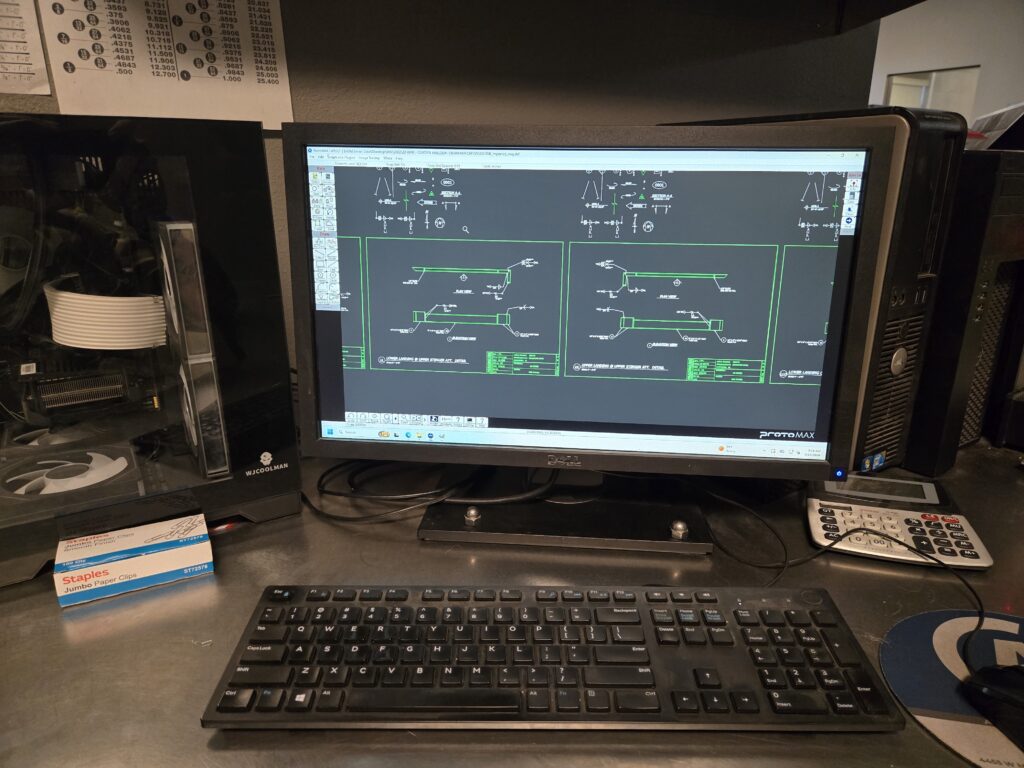
In our drafting department we create detailed drawings and 3D models that ensure every part is accurate, buildable, and aligned with the project intent. Whether it’s architectural metalwork or complex industrial assemblies, we take ideas, sketches, and engineering requirements and turn them into clear, fabrication-ready documentation.
By connecting drafting directly with our fabrication process, we reduce errors, improve efficiency, and deliver consistent, high-quality results from design through final production.
Capabilities:
- AutoCad – 2D modeling
- SolidWorks – 3D modeling
What is AutoCad?
AutoCAD is a 2D drafting program used to create precise technical drawings and layouts. It’s commonly used for floor plans, elevations, sections, and fabrication details where accuracy is critical.
In metal fabrication and construction, AutoCAD helps clearly communicate dimensions, tolerances, and installation requirements so engineers, architects, and contractors are all working from the same information.
What is SolidWorks?
SolidWorks is a 3D modeling program used to design parts, assemblies, and mechanical systems. It allows us to build fully detailed models, check how components fit together, and catch issues before anything is built.
For engineered and production work, SolidWorks improves accuracy, speeds up revisions, and produces detailed shop drawings directly from the model.
Whats the difference?
AutoCAD and SolidWorks are both essential tools, but they serve different purposes:
AutoCAD is best for:
- 2D drawings
- Architectural plans
- Fabrication details
- Construction coordination
SolidWorks is best for:
- 3D modeling
- Complex assemblies
- Mechanical and engineered parts
- Fit, function, and motion checking
We often use both depending on the project. Choosing the right tool—or combining them—helps us deliver accurate, efficient, fabrication-ready work every time.